
Performance
Real Speed Is Measured in Milliseconds, Not Megabits
Big providers brag about big numbers, but they hide a dirty secret: they force your data on a 1,200-mile detour to Dallas and back. That long commute creates the “lag” you feel, even on their expensive plans. JackRabbit takes the shortcut. We connect you directly to the internet right here in El Paso. By cutting out the corporate detour, your connection reacts instantly. It’s simple physics: a shorter path means a faster experience.
The detour vs. the shortcut
Why your data takes the long way
Most providers backhaul your traffic to a distant regional hub and bring it back. We peer locally in El Paso, so your data takes the shortest path to the internet.
Typical provider
The 1,200-mile round trip
Your traffic is hauled to a distant hub, then back again. Those extra miles add the lag you feel on calls, games, and cloud apps.
Extra distance means extra delay.
JackRabbit
The direct route
We connect you straight to the internet from a local El Paso data center, with no corporate detour in between.
A shorter path means a faster experience.
Engineered end to end
Mbps is capacity. Latency is feel.
A big speed-test number does not always mean the internet feels fast. JackRabbit is engineered for low latency — the responsiveness behind smooth calls, fast clicks, gaming, streaming, and remote work.
Capacity
Mbps is how wide the pipe is
Capacity is how much data can move at once. Once a household has enough for its normal use, adding more Mbps rarely changes how the internet feels.
Responsiveness
Latency is how long the pipe is
Latency is how fast the internet answers. A shorter path is what makes video calls, gaming, and browsing feel instant.
The full experience
What makes internet feel fast?
A fast connection is not just one big speed-test number. Responsiveness depends on the full experience: your Wi-Fi, your outdoor radio link, how traffic is managed, and the path your data takes across the internet.
Strong home Wi-Fi
Managed mesh Wi-Fi helps your devices stay connected throughout the house, not just near the router.
Dedicated outdoor radio
A professionally installed antenna connects your home to JackRabbit’s local fixed wireless network.
Smart traffic management
LibreQoS helps keep calls, games, streams, and downloads from fighting each other when the house is busy.
Low-latency routing
We tune routes and network paths to reduce unnecessary delay, so apps respond faster.
Measured from El Paso · Lower is better
Real latency, not marketing numbers
Round-trip latency examples from JackRabbit performance testing. Actual results vary by destination, routing, Wi-Fi conditions, customer equipment, and network load.
Phoenix, AZ
Dallas, TX
Los Angeles, CA
LibreQoS helps
What happens when the house is busy
Without smart queueing, a big download can make everything else feel delayed. JackRabbit keeps latency controlled even when multiple devices are active.
Latency under load
When the house gets busy, queueing can make latency spike. Smart queueing keeps the line flat.
Without smart queueing
- Download dominates
- Video call waiting
- Gaming ping spike
With JackRabbit smart queueing
- Download balanced
- Video call smooth
- Gaming responsive
Real-world benefits
What low latency feels like
Smoother video calls
Less freezing, stutter, and awkward delay.
More responsive gaming
Lower ping matters more than raw Mbps.
Snappier browsing
Pages and apps respond faster.
Better remote work
Cloud apps and meetings feel more stable.
Speed is what you buy. Responsiveness is what you feel.
JackRabbit is built for the part of internet performance people notice every day: smooth calls, fast clicks, responsive games, stable streaming, and cloud apps that do not drag.
We’ll check your address, line of sight, and installation options.
Low latency
Built by Network Engineers, Not Marketing Departments
Most internet companies sell big bandwidth numbers. JackRabbit focuses on the engineering that actually makes internet feel fast: low latency, smart queue management, clean routing, and reliable performance under load.
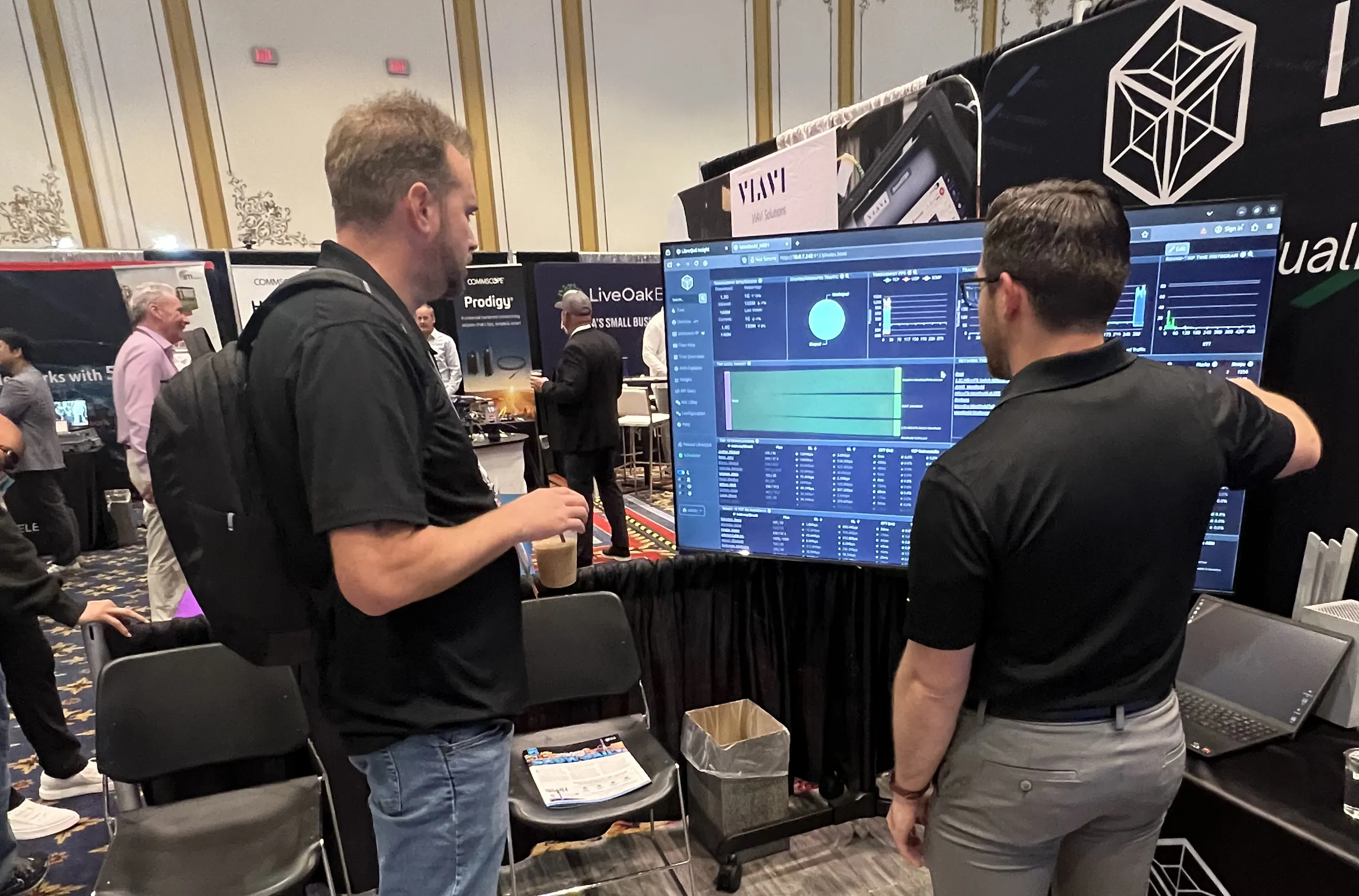
Our team helped develop LibreQoS, an open-source Quality of Experience platform used by ISPs worldwide to reduce lag and keep connections responsive when networks get busy. We bring that same technology and engineering discipline to the JackRabbit network in El Paso.
Our approach is backed by open standards, academic research, and real-world performance testing, including:
- Cloudflare: Making Home Internet Faster
- BITAG: Latency Explained
- GameBench: Network Performance and Gamer Experience
The result is internet designed around the experience customers actually notice: smooth calls, responsive gaming, stable streaming, fast clicks, and cloud apps that do not drag.
Learn more about LibreQoS

Industry recognition
WISPA 2025 Product of the Year
The Wireless Internet Service Providers Association named LibreQoS — the open-source latency technology our team builds and maintains — its 2025 Product of the Year. The same technology runs on JackRabbit's network.
Left to right: Frank, Luis, Robert, and Herbert at the 2025 WISPA awards. Luis and Robert are on the JackRabbit team; Robert leads LibreQoS.
Measured routes from El Paso
Measured Routes from El Paso
JackRabbit connects to the wider internet from a local El Paso data center with two Tier-1 upstream providers, so your traffic leaves El Paso directly.
These round-trip examples show the difference local routing makes — lower latency for games, calls, cloud apps, and everyday browsing.
| Destination | JackRabbit | CableCo | FiberCo | What it means |
|---|---|---|---|---|
| Phoenix, AZ | 14ms | 84ms | 28ms | A very short round trip to a major regional internet hub. |
| Dallas, TX | 14ms | 32ms | 20ms | Fast response to a major Texas internet exchange point. |
| Los Angeles, CA | 25ms | 60ms | 22ms | Strong westbound performance for gaming, streaming, and cloud services. |
The internet problem speed tests miss
The Internet Problem Speed Tests Miss
Bandwidth vs. Responsiveness
Most internet companies sell speed like one number tells the whole story: more Mbps, bigger plan, faster internet. But that is not how internet performance actually feels.
Bandwidth is capacity – how much data can move at once. Responsiveness is how quickly your connection reacts when you click, talk, stream, game, or open a cloud app. Once a household has enough bandwidth for its normal use, adding more Mbps often does very little to improve everyday internet performance.
A 4K stream may need only around 25 Mbps. Video calls often need just a few Mbps. Online games usually do not need huge bandwidth; they need low latency, low jitter, and low packet loss. That is why a connection with a giant speed-test number can still feel sluggish if the route is inefficient, the Wi-Fi is weak, or latency spikes when the network is busy.
JackRabbit focuses on the part of performance customers actually feel: responsive browsing, smooth calls, stable streaming, lower ping, and cloud apps that do not drag.
The Hidden Problem: Bufferbloat
Many internet connections slow down when the household gets busy. Someone starts a large download, a streaming device ramps up, a game update begins, or multiple people jump on video calls – and suddenly everything feels delayed.
That problem is often caused by bufferbloat: excessive queueing that makes latency spike under load.
JackRabbit addresses this with smart queue management using LibreQoS, helping keep latency controlled even when multiple devices are active at the same time.
In plain English: we do not just give you bandwidth. We engineer the connection to stay responsive when your home is actually using it.
Stop paying for speed you can’t feel.
Switch to the shortest path to the internet today.